
Transporting a pet from one location to another is not always as straightforward as it sounds. Whether you’re taking your dog to a veterinary appointment, arranging a visit to the groomer or helping your cat travel safely, careful planning can make a significant difference.
For many UK pet owners, transportation can become challenging when work commitments, mobility limitations or lack of access to a suitable vehicle make journeys difficult.
At Pawsome Companions Ltd, we understand that pets deserve thoughtful care during every stage of their journey. Travelling should be planned around the animal’s safety, comfort and individual needs rather than treated as an ordinary passenger journey.
Pet taxi services can provide a convenient option for owners who need assistance arranging suitable transport for their companions.
This guide explains what pet transportation involves, how to prepare your animal and which questions to ask before making a booking.
A pet taxi service is a transportation arrangement designed specifically for animals.
Depending on the provider, journeys may include trips to veterinary practices, grooming salons, boarding establishments or other agreed destinations.
Some services transport pets with their owners, while others offer animal-only transportation.
The exact arrangements should always be confirmed before booking.
Pet transport differs from an ordinary taxi journey because animals have specific safety and welfare requirements.
They may need appropriate restraint, suitable ventilation, temperature management and careful handling.
Some animals become anxious during travel, while others have medical or mobility needs that require additional planning.
A responsible service should consider these factors before accepting a booking.
There are several reasons why owners may need assistance with pet transportation.
Some people do not own a car, while others may have difficulty transporting a large dog or managing an anxious animal.
Older owners or people with mobility limitations may find veterinary appointments particularly challenging.
Work commitments can also make it difficult to arrange transport during normal business hours.
A pet taxi may provide a practical solution when public transport is unsuitable or unavailable.
However, availability and suitability depend on the provider’s vehicle, experience and operating arrangements.
Owners should never assume that every service can accommodate all species, breeds or medical conditions.
Veterinary appointments are among the most common reasons for arranging pet transport.
Routine vaccinations, health checks, dental assessments and follow-up appointments may all require travel.
Owners should provide the appointment time, veterinary practice address and relevant instructions.
If the animal is travelling without its owner, the veterinary practice should be contacted beforehand to confirm what authorisation is required.
A pet taxi driver cannot automatically consent to veterinary treatment on an owner’s behalf.
Payment arrangements should also be clarified.
For animals that are seriously unwell or injured, an ordinary pet taxi may not be suitable.
Emergency veterinary transport requirements should be discussed directly with a veterinary practice or an appropriate specialist provider.
Grooming is an important part of care for many dogs and some other companion animals.
Regular coat maintenance can help prevent matting and allow owners to identify skin or coat concerns.
However, travelling to a grooming appointment can be inconvenient when owners have limited time.
A pet taxi may help with transport to and from the salon.
Before booking, confirm whether the groomer is expecting the animal and whether the pet must be accompanied by its owner.
The transport provider should also understand the collection arrangements.
Animals should not be left unattended outside premises while waiting for an appointment.
A clear schedule helps minimise unnecessary waiting and stress.
Dogs should be transported using suitable equipment that prevents them from distracting the driver and reduces the risk of injury.
The UK Highway Code advises appropriate restraint, such as a suitable harness, carrier, crate or dog guard.
The equipment must be appropriate for the animal and vehicle.
Dogs should not travel loose in the front of a moving vehicle.
Owners should explain any relevant behaviour, including anxiety, reactivity or difficulty entering cars.
A dog that has never travelled with an unfamiliar person may benefit from gradual familiarisation.
Some dogs require additional time and patience before entering a vehicle comfortably.
Forcing a frightened animal into transport can increase distress and create safety risks.
Cats often find travel unfamiliar and stressful.
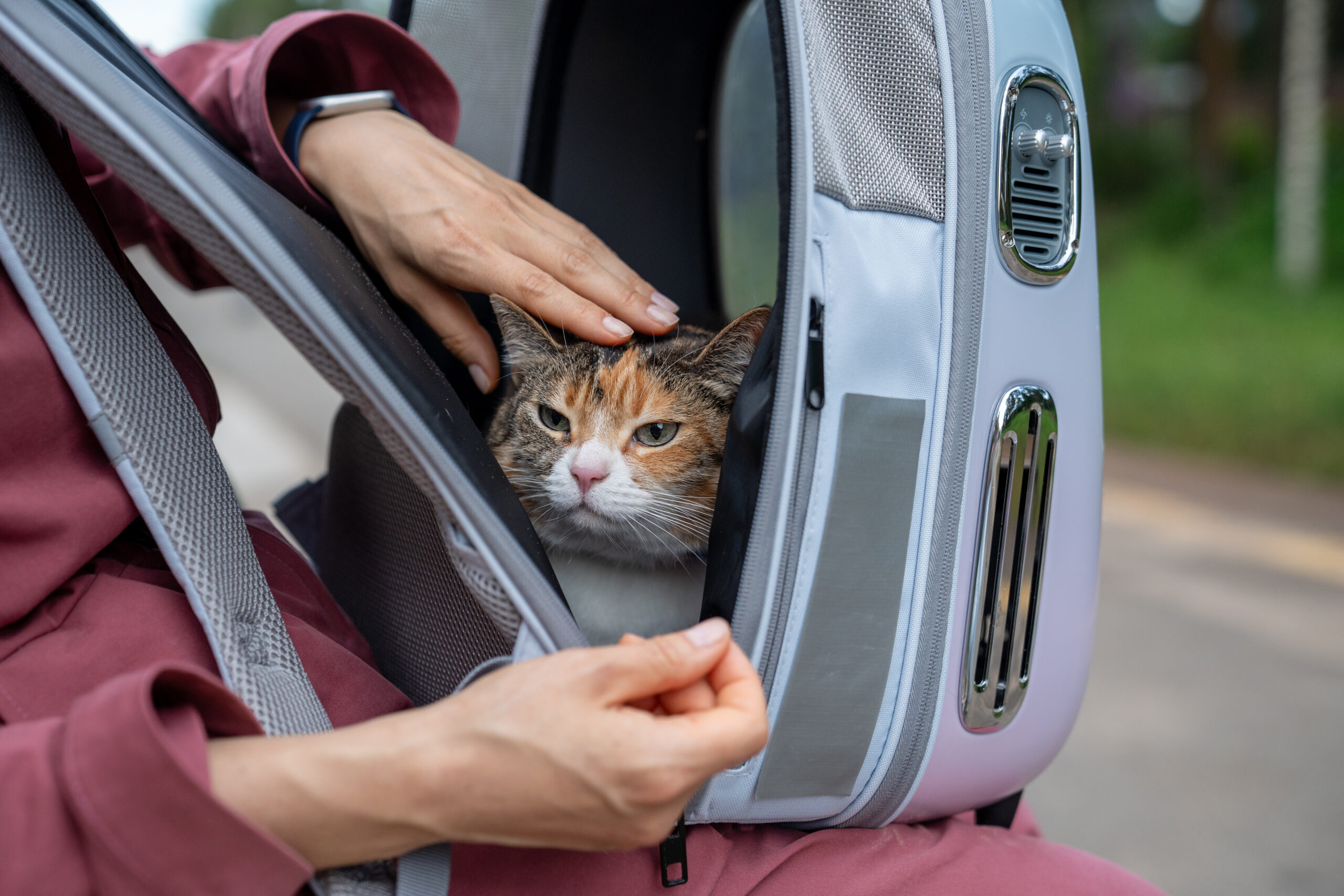
A secure, suitable carrier is generally essential for safe transportation.
The carrier should be large enough for the cat to adopt a comfortable position and should have appropriate ventilation.
It must also be secured safely within the vehicle.
Owners can help their cats become familiar with the carrier by leaving it accessible at home before travel.
Familiar bedding may provide reassurance.
During the journey, the carrier should remain securely closed.
Opening a carrier in an unsecured vehicle or public area creates a serious escape risk.
Cats should be handled calmly and protected from excessive noise and temperature extremes.
Puppies may be unfamiliar with vehicle travel and require careful introductions.
Their first journeys can influence how they respond to travelling later in life.
Short, positive experiences may help build confidence.
Suitable restraint is essential, and puppies should not be allowed to roam freely around the vehicle.
Owners should consider feeding times, toilet needs and the length of the journey.
Some puppies experience travel sickness, particularly while they are young.
If symptoms are frequent or severe, veterinary advice may be helpful.
Vaccination status should also be considered when planning stops or exposure to unfamiliar environments.
Older animals may require additional support during transportation.
Reduced mobility, arthritis or other health conditions can make entering and leaving vehicles difficult.
Some dogs benefit from suitable ramps or carefully managed assistance.
However, lifting an animal incorrectly can cause injury to both the pet and handler.
Owners should explain any mobility restrictions before booking.
The provider should confirm whether appropriate equipment and handling arrangements are available.
Journeys should be planned to minimise unnecessary discomfort.
Animals with serious medical needs may require veterinary or specialist transportation rather than a standard pet taxi.
Some pets enjoy car journeys, while others become anxious as soon as they see a vehicle.
Signs of travel stress may include trembling, vocalisation, panting, drooling or attempts to escape.
Motion sickness can also cause nausea or vomiting.
Owners should explain any previous difficulties before arranging transportation.
Gradual training and positive associations may help some animals become more comfortable with travel.
For persistent problems, a veterinary surgeon can advise on appropriate management.
Sedatives or anti-sickness medication should never be given without suitable veterinary guidance.
A calm driver, careful handling and a comfortable environment can also help reduce unnecessary stress.
Temperature control is an essential part of animal transportation.
Vehicles can become dangerously hot, even when outdoor conditions do not seem extreme.
Dogs and other animals may develop life-threatening heat-related illness when exposed to excessive temperatures.
Animals should never be left unattended in a vehicle where conditions could become unsafe.
Suitable ventilation and temperature management are essential throughout the journey.
Cold weather also requires consideration, particularly for young, elderly or unwell animals.
Transport arrangements should reflect the needs of the individual pet.
The safest option may sometimes be to postpone a non-essential journey.
Longer journeys require additional preparation.
The provider should consider travel duration, weather, suitable breaks and the animal’s health.
Dogs may require planned opportunities for water and toilet breaks.
Cats and small animals may need different arrangements to minimise escape risks and unnecessary handling.
Owners should provide clear information about feeding, medication and behavioural needs.
For longer-distance or commercial animal transport, additional welfare rules and authorisation requirements may apply.
Providers should check the relevant legislation before offering such services.
A journey should never be accepted simply because a vehicle is available.
Animal welfare must remain the priority.
Preparing your pet in advance can make collection more straightforward.
Owners should have suitable leads, harnesses or carriers ready.
Identification details and emergency contact information should be accurate.
Any relevant medical information should be communicated before travel.
If the animal is attending a veterinary appointment, the owner should confirm the destination and appointment time.
For journeys involving collection by another person, handover arrangements should be clear.
A familiar blanket or suitable comfort item may help some animals.
However, loose objects should not compromise the safety of the transport equipment.
Before booking, owners should understand how the service operates.
Ask what types of animals can be transported and whether the provider has experience with your pet’s particular needs.
Discuss vehicle restraint, cleaning procedures and temperature management.
Insurance arrangements should also be clarified.
Owners should ask whether they can accompany their pet and what happens if a journey is delayed.
If multiple animals are transported together, the provider should explain how separation and compatibility are managed.
Emergency procedures are another important consideration.
A responsible provider should be willing to answer questions clearly and explain any limitations.
Pet taxi prices vary according to location, distance, journey duration and the type of service required.
Some providers charge a fixed local journey rate.
Others use mileage-based pricing or include waiting time.
A return journey may be priced differently from two separate bookings.
Additional handling requirements or longer-distance journeys may affect the quotation.
Owners should confirm whether the price includes collection, drop-off, waiting time and any necessary assistance.
All mandatory charges should be disclosed before booking.
A clear quotation helps customers compare services and avoid unexpected costs.
Commercial animal transportation may involve legal requirements beyond those applying to ordinary private pet journeys.
Depending on the type of operation, vehicle use and journey, relevant requirements may include suitable motor insurance, animal welfare obligations and transport authorisations.
Rules can vary according to the circumstances of the journey and the country within the UK.
Providers should check current requirements with the appropriate authorities and insurers.
Owners should not assume that an ordinary private motor insurance policy covers commercial pet transportation.
Similarly, not every animal transport service is authorised to undertake every type of journey.
Professional responsibility includes understanding these limitations.
Cleanliness is an important part of responsible pet transportation.
Vehicles and transport equipment should be maintained appropriately.
Cleaning procedures help reduce contamination and make journeys more comfortable.
Different animals may require separate equipment or suitable hygiene measures.
Owners should inform the provider if their pet has a known infectious condition.
Transporting an animal with a potentially contagious illness may require special arrangements.
The provider should consider whether the journey can be undertaken safely.
Clean bedding, suitable carriers and well-maintained restraint equipment all contribute to a professional service.
Animal welfare should guide every transportation decision.
Pets must be handled carefully and protected from avoidable injury, distress and discomfort.
Journey planning should account for the animal’s age, health, species and temperament.
Some animals may be unsuitable for routine transport because of illness or extreme anxiety.
A responsible provider should be prepared to recommend an alternative arrangement when necessary.
Owners also have a role in providing accurate information.
Concealing behavioural or medical concerns can place the animal and handler at risk.
Good communication helps everyone make safer decisions.
Not every pet will enjoy travelling, but thoughtful preparation can improve the experience.
Owners can help by introducing suitable carriers and vehicle environments gradually.
Reward-based familiarisation may be particularly useful for dogs and cats that show mild travel anxiety.
Keeping journeys calm and predictable can also help.
A suitable pet taxi provider should avoid unnecessary rushing and handle animals respectfully.
Positive experiences can make future appointments easier to manage.
However, animals showing severe distress may require a more individualised approach.
Pet taxi services can offer valuable assistance for owners who need help transporting their animals.
Whether the destination is a veterinary practice, grooming salon or another agreed location, safety and comfort should come first.
Appropriate restraint, careful planning, transparent pricing and clear communication are essential.
At Pawsome Companions Ltd, we believe responsible pet care extends beyond the home and into every journey.
Need assistance arranging pet transportation? Contact Pawsome Companions Ltd to discuss your pet taxi requirements, journey details and service availability.
Pawsome Companions Ltd – Caring for Your Pets, Every Step of the Journey.