
Introduction: The Joyful Problem
Imagine this: a crisp autumn afternoon in the United Kingdom, your doorbell chimes harmoniously, and your friends step through the threshold with smiles. In a split second, your exuberant companion is airborne, paws sorcerously levitated, aiming for a headlong, joyous embrace—straight onto your startled guests. While there’s no denying the heartwarming enthusiasm of our pawsome companions, jumpy greetings can swiftly turn an inviting entrance into a frenzied tango. But worry not! The dance can be choreographed with grace and patience.
Understanding Canine Psychology – The Enthusiasm Elixir
First, let’s decode the bounding joy. Why do dogs leap with such fervor during greetings? It stems from their wild ancestors who sniffed faces in greeting. Fast forward to our domesticated companions, and they equate closeness with affection. For them, a jump equals a grandiose welcome, augmented by human responses—be it laughter or reprimand. Comprehending this behavior not only illuminates the reasons behind their leaps but also paves the path to respectful salutations.
Establishing the Fundamentals – Commands with Compassion
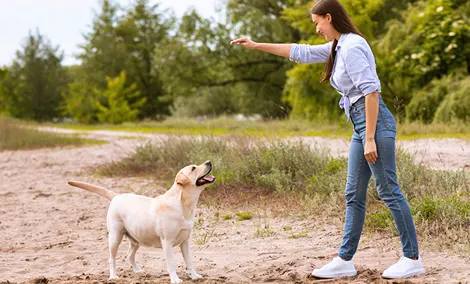
Here lies the crux: instructing without intimidation. Begin with basic sit-and-stay commands, reinforcing them with joyous praise when executed successfully. Utilize treats as currency for their cooperation, introducing these commands in familiar, low-distraction environments first. The challenge rises in translating this mastery from quietude to the excitement of arrival moments. Pawsome Companions Ltd, a beacon for canine training in the United Kingdom, emphasizes consistency and timing in teaching obedience. Weaving this knowledge into daily interactions transforms the tumultuous energy into poised patience.
Consistency is Key – Training with Family and Friends
Consistency crafts champions. Convey the training protocol to each member of your household, ensuring that the communication to your dog remains uniform. Invite friends—seasoned in meeting your dog—to rehearse arrival scenarios. Arm them with commands and treats. Their role is both critical and comforting; each encounter is a lesson. This consistency nurtures a garden of learned responses, turning sporadic success into habitual triumph.
The Power of Positive Reinforcement
Transitioning from the chaotic bounce to learned manners hinges on positive reinforcement. Every successful ‘sit’ upon a visitor’s arrival is a jackpot moment, showered with affection and tasty rewards. The psychology is simple: behaviors that are rewarded are likely to be repeated. Persistence rewards both dog and owner, sowing seeds of understanding and boundaries within the relationship.
Embracing Patience and Professional Guidance
Rome’s cobblestones were not laid overnight—nor are the pathways to ideal canine etiquette. Patience is your steadfast ally. Monitor progress, adapting strategies where necessary. Should you find yourself at a standstill, consider enlisting assistance from a professional. Reach out to Pawsome Companions Ltd or similar establishments in the United Kingdom to find encouragement and experience, guiding you through personalized training plans that account for individual quirks.
Conclusion: The Outcome of Purposeful Training
Training a dog not to jump onto guests requires time, consistency, and buckets of patience, creating an atmosphere where your hound grows from buoyant to balanced. Understanding their instincts, practicing consistent commands, reinforcing positive behaviors, and seeking guidance when needed, instills a newfound grace in your furry friend’s greetings. The energetic leaps gradually transform into poised sits, ensuring that each welcome is not just warm, but also courteous.